
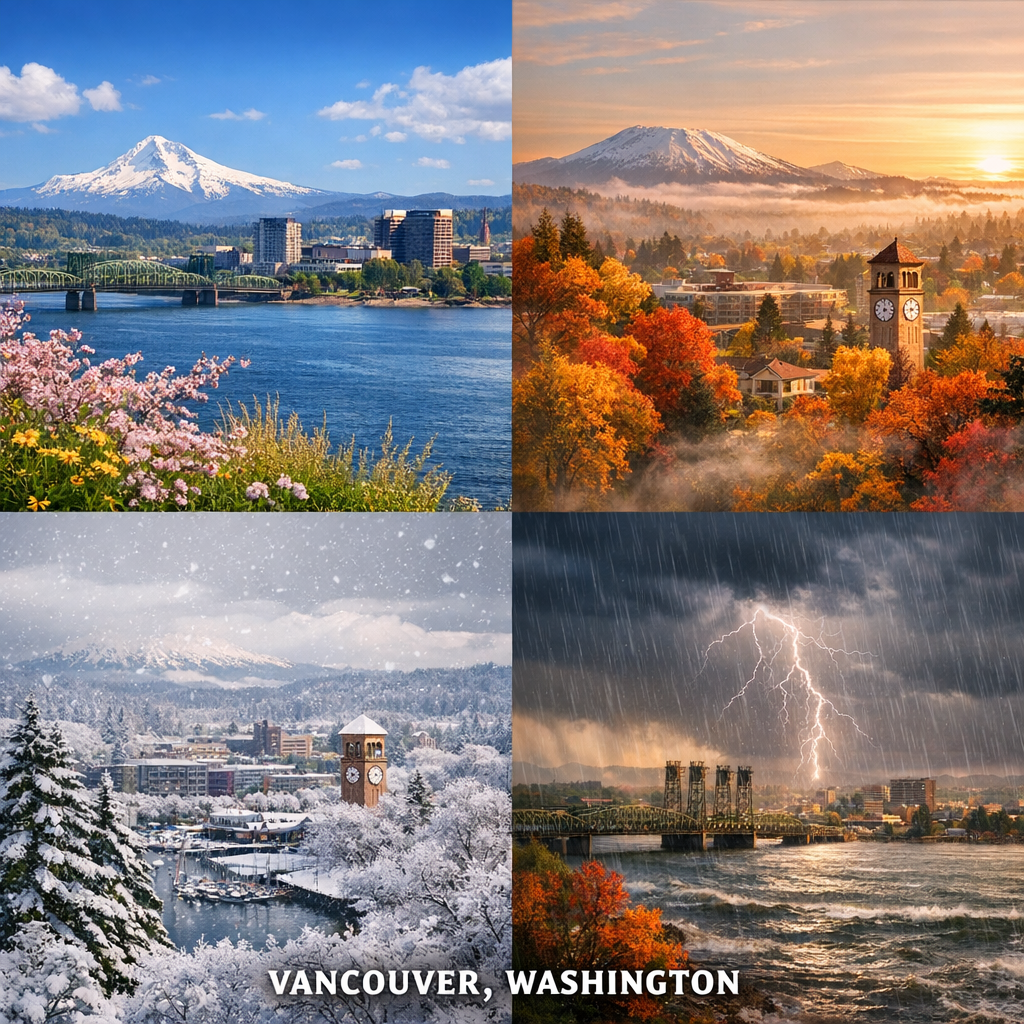
Vancouver, Washington, offers a diverse climate that shapes our daily lives and the environment around us. Understanding these patterns is essential for residents to plan activities, prepare for seasonal changes, and appreciate the natural beauty of our region.
Seasonal Weather Patterns
Spring (March – May)
Spring in Vancouver brings gradual warmth, with average high temperatures rising from 51.8°F (11°C) in March to 66.6°F (19.2°C) in May. Rainfall decreases during this period, from 3.74 inches (95mm) in March to about 1.85 inches (47mm) by May’s end. Daylight hours extend up to 14.9 hours in May, offering longer days for outdoor activities.
Summer (June – August)
Summers are warm and dry, with average highs reaching 80.6°F (27°C) in August. July is typically the driest month, averaging 0.35 inches (9mm) of rainfall. Extended daylight hours, ranging from 15.3 to 15.6 hours, provide ample time for outdoor pursuits.
Autumn (September – November)
Autumn sees cooling temperatures, with highs decreasing from 73°F (22.8°C) in September to 50.2°F (10.1°C) in November. Rainfall becomes more frequent, with November receiving up to 4.06 inches (103mm). Cloud cover increases during this season, leading to more overcast days.
Winter (December – February)
Winters are mild but wet, with December being the coldest month, experiencing lows around 34°F (1.1°C). Rainfall peaks in December at 5.08 inches (129mm), making it the wettest month. Snowfall is minimal, with only 0.35 inches (9mm) reported in December.
Climate Change Impacts
Climate change poses significant risks to Vancouver, particularly concerning precipitation and heat. The city faces an extreme risk from increased precipitation and a significant risk from rising temperatures. Approximately 60% of buildings in Vancouver are at risk of wildfire, and about 11% are at risk of flooding.
Recent developments indicate a strong El Niño event is developing, which could worsen Washington State’s upcoming wildfire season by increasing heat and reducing precipitation. This phenomenon is known to alter global weather patterns, leading to hotter, drier conditions in the Pacific Northwest.
Preparing for the Future
Understanding Vancouver’s climate and the potential impacts of climate change is crucial for residents. Staying informed about weather patterns, supporting local environmental initiatives, and adopting sustainable practices can help mitigate these risks and ensure our community remains resilient in the face of changing conditions.